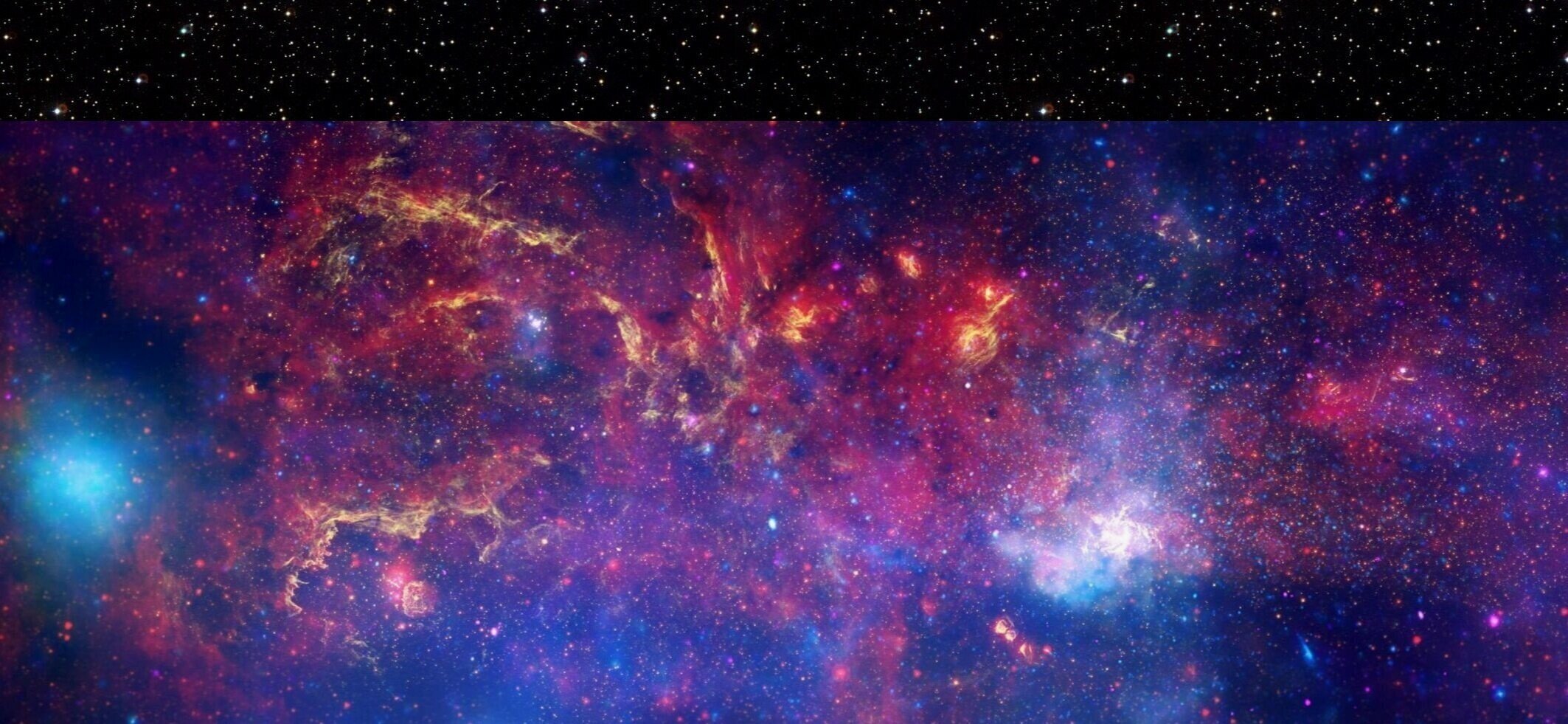
Humans Vs. Galaxies
October 1, 2008 on 2:05 am | In Astronomy, Life, cosmology |
Pop Quiz, everyone. The most wonderful, beautiful, and complicated things in the Universe are all made up of tiny components. Humans, the most differentiated animals on the planet, are made up of cells.


Galaxies, on the other hand, are made up primarily of stars. (At least, the portion of them that we can see is!)

So my quiz question for you is this:
Are there more cells in the typical human body or more stars in a typical galaxy?
The numbers are tremendous for both of these. Let’s start with humans. We start out as a zygote: a single fertilized egg cell.

From that, we grow up into full-grown adult humans, containing (are you ready?) 75 to 100 trillion cells! Now, things are even more interesting than that, because the cells that make up your skeleton and internal organs, your nervous system and your skin, your blood vessels and brain, only number about 4 trillion.

So where are the rest of them? Moving through your body, keeping you alive and functioning. Your body contains about one trillion white blood cells of various types, about two trillion platelets, and a whopping 30 trillion red blood cells! This means every time you donate a pint of blood, you’re losing 4,000,000,000,000 cells!

There are also about 40 trillion bacterial cells that live in your body (mostly your intestine), aiding in digestion. All told, that’s over 75 trillion cells in your body; fully half of them were made by you. That’s going to be tough to beat.

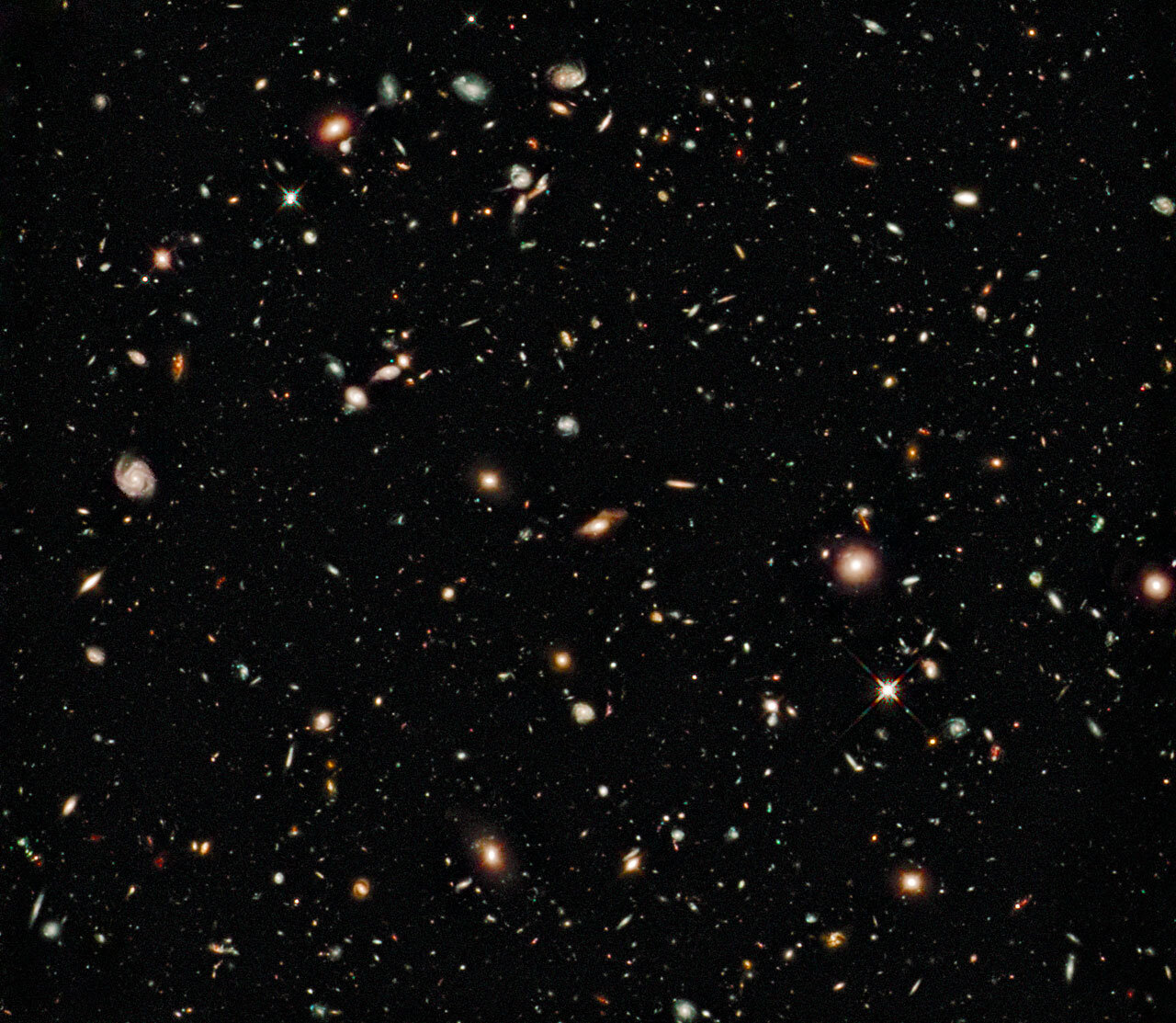
Let’s look at a typical galaxy now, like our own, or perhaps our nearest neighbor (above), Andromeda. Our Sun is not typical of stars in galaxies, it’s actually pretty bright. Only about 10% of stars are as massive as our Sun (a G-type star), which means 90% of them are dimmer, cooler, and smaller.

In fact, when you look up at the night sky, of the hundreds or even thousands of stars that are close to us (within about 30 light years), you know how many are type O? Zero. Know how many are type B? Also zero. Know how many are type A? Four.

Most of the stars that are there are not the stars you think of, much like the red blood cells and digestive bacteria in our bodies are not the cells that you think of when you think of our bodies. But when we count up all the stars in a typical galaxy, we get a pretty large number, too: 400 billion. That’s still nowhere close to the 75 trillion cells in a human body, but that’s the answer for typical galaxies. What about the largest galaxy in the Universe, though, can that compete?

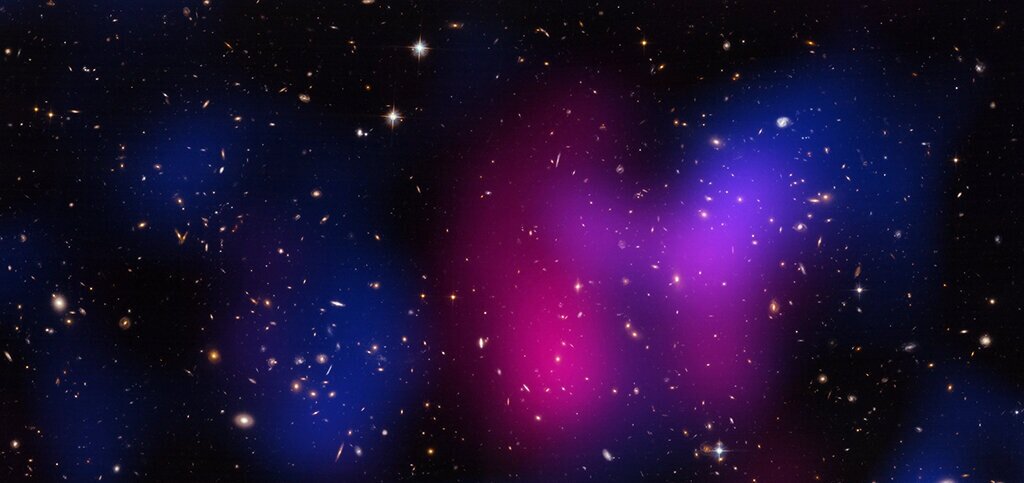
In the center of one of the hugest galaxy clusters we’ve ever found, Abell 2029, lies a galaxy 6 million light-years across, or more than 60 times the diameter of the Milky Way (at only 100,000 light years). The number of stars in this galaxy? Estimated to be just over 100 trillion. The galaxy itself, the largest known galaxy in the Universe, is IC 1101:

So there are, give-or-take, as many cells in your adult body as there are stars in the biggest galaxy in the entire Universe. Remember that the next time someone tells you how insignificant you are: it takes 75,000,000,000,000 cells to make something as insignificant as us!
33 Comments »
RSS feed for comments on this post. TrackBack URI
Leave a comment
Entries and comments feeds. Valid XHTML and CSS. ^Top^ Powered by TopSoftware4Download.com with a personally modified jd-nebula-3c theme design.

Wow, nice comparison.
Comment by Brian — October 1, 2008 #
[…] ik wist dat het op dit moment doorgaat voor het grootste bekende sterrenstelsel. Maar ik kwam het ergens op een site tegen en dacht toen ‘hé, daar ga ik wat over astrobloggen’. IC 1101 is een gigantisch […]
Pingback by Wat is het grootste sterrenstelsel in het heelal? en Astroblogs — October 1, 2008 #
[…] – On counting stars and cells – Ethan Siegel of Starts With A Bang wonders which is bigger, the number of stars in a galaxy, or […]
Pingback by Carnival of Space: October 2, 2008 « Alice’s Astro Info — October 2, 2008 #
[…] Posts Why build an accelerator?Humans Vs. GalaxiesTrying to Understand GravityWeekend Diversion: Did I make the right call?A New Hint at the Expanding […]
Pingback by Why build an accelerator? | Starts With A Bang! — October 3, 2008 #
[…] PhysicsWhat kind of Planet is that?Weekend Diversion: Equality of the SexesWhy build an accelerator?Humans Vs. GalaxiesTrying to Understand GravityWeekend Diversion: Did I make the right call?A New Hint at the Expanding […]
Pingback by From the top down | Starts With A Bang! — October 15, 2008 #
This is an easy question. There are a finite (though incredibly large) number of cells in even the biggest human body, but the universe is infinite and the stars go on forever, you could literally never count them all, no matter how long you live.
Comment by Runescope — February 24, 2009 #
Stars don’t go on forever, and the Universe that we call “our Universe” (i.e., the stuff we can ever hope to see if we live to infinity) is not only finite, it isn’t all that big.
About 1011 galaxies, each one with about 1011 stars in it. So not only are there more cells in your body than stars in a galaxy, but there are more cells in your body than galaxies in the Universe!
Comment by ethan — February 24, 2009 #
it’s also interesting how similar the most basic structure of galaxy clusters are
to neurons in the brain.
Comment by johnald — February 24, 2009 #
Great comparison but still they say human, specifically the human mind is the final frontier.
Comment by Joe — February 25, 2009 #
[…] En la sangre del cuerpo humano hay alrededor de un billón (1.000.000.000.000) de células blancas de diversos tipos, cerca de dos billones (2.000.000.000.000) de plaquetas, y la friolera de 30 billones (30.000.000.000.000) de glóbulos rojos. Cada vez que donas medio litro de sangre, ¡estás perdiendo cuatro billones (4.000.000.000.000) de células! [Humans Vs. Galaxies] […]
Pingback by «Hola, venía a donar 4.000.000.000.000 de células» en blog de jesus — February 26, 2009 #
[…] En la sangre del cuerpo humano hay alrededor de un billón (1.000.000.000.000) de células blancas de diversos tipos, cerca de dos billones (2.000.000.000.000) de plaquetas, y la friolera de 30 billones (30.000.000.000.000) de glóbulos rojos. Cada vez que donas medio litro de sangre, ¡estás perdiendo cuatro billones (4.000.000.000.000) de células! [Humans Vs. Galaxies] […]
Pingback by «Hola, venía a donar 4.000.000.000.000 de células» | Buzzeando — February 26, 2009 #
[…] Fuente Comparte nuestras noticias. […]
Pingback by «Hola, venía a donar 4.000.000.000.000 de células» | Listoco — February 27, 2009 #
Larry: That means that our whole solar system could be, like one tiny atom in the fingernail of some other giant being. This is too much! That means one tiny atom in my fingernail could be–
Jennings: Could be one little tiny universe.
Larry: Could I buy some pot from you?
Comment by Belushi — February 27, 2009 #
[…] En la sangre del cuerpo humano hay alrededor de un billón (1.000.000.000.000) de células blancas de diversos tipos, cerca de dos billones (2.000.000.000.000) de plaquetas, y la friolera de 30 billones (30.000.000.000.000) de glóbulos rojos. Cada vez que donas medio litro de sangre, ¡estás perdiendo cuatro billones (4.000.000.000.000) de células! [Humans Vs. Galaxies] […]
Pingback by Donaciones Celuliticas | FactorZero — February 28, 2009 #
[…] Cevabı burada. […]
Pingback by İnsanlar Galaksilere Karşı | Avam Kamarası — March 31, 2009 #
Whizz! Bang! Science!…
I started out at the always-interesting Neurotopia, who directed me to Starts with a Bang (who has the best personal photo ever). Ethan is a theoretical astrophysicist who just loves science. Two fave posts: Putting the Yellow in your Urine……
Trackback by Trusted.MD Network — April 10, 2009 #
[…] advantage of opportunity when it presents itself. * A comparison of cells in the human body and stars in a galaxy. It makes you wonder what amazing patterns are beyond the realm of our understanding. (via Dark […]
Pingback by mental_floss Blog » Morning Cup of Links: Nostalgia ain’t what it used to be. — June 22, 2009 #
Greetings earthlings I am +1 EXTRA terrestrial put on planet earth by my MOTHER (woman) who walk the planet with over 3 billion other EXTRA terrestrials. Just wanted to let you know we are all EXTRA terrestrials and this means Intelligent Design is possible. I am a Deist Intelligent Design Scientific Researcher.
Like the web-page it gave me some great insight and keep up the good work. : -)
Comment by Finite Force — August 6, 2009 #
По моему мнению Вы ошибаетесь. Могу это доказать. Пишите мне в PM, пообщаемся.
Comment by Lubertus — September 14, 2009 #
Сдесь комменты можно почитать и в цирк не ходить!! бред какойто.
Comment by Komiks — September 15, 2009 #
every time i look at a clock it seems to be 11:01. .in school, since kindergarden till i graduated my student number was 1101. .and i seem to just glance at random and see this number(on sides of buildings, mailboxes ect.) then right now i find out the biggest galaxy in the known universe is IC 1101.. Amazing.. IC(I see) 1101…crazy
Comment by Rreyna — September 27, 2009 #
Interesting! its like comparing huge and tiny objects that are related to each other. like the cells in the human body. Humans inside the earth. Earth within the solar system and the milky way. And various galaxies within the universe.
It is really interesting to know these things. I like your post! keep it up! Thanks!
Comment by Lisette Arana Ocampo — October 5, 2009 #
I agree, I am just passing through to find a picture of the sun, but I stopped to look at this article. It’s truly fascinating.
Comment by Stephen — October 14, 2009 #
Space Travel To The Largest Galaxies In The Universe
http://www.youtube.com/watch?v=F4nDPQgnqeA
Comment by sam — December 6, 2009 #
Nice site design. And big thanks for this post!
Comment by Nokiaman — December 20, 2009 #
hiiiiiiiiiiiiiiiiiiiiiiiiiiiiiiiiiiiiiiiiiiiiiiiii
Comment by lola — January 10, 2010 #
the funniest blonde joke
I knew a blonde that was so stupid that…….
* she called me to get my phone number.
* she spent 20 minutes looking at the orange juice box because it said “concentrate.”
* she put lipstick on her forehead because she wanted to make up her mind.
*she tried to put M&M’s in alphabetical order.
*she sent me a fax with a stamp on it.
*she tried to drown a fish.
*she thought a quarterback was a refund.
*she got locked in a grocery store and starved to death.
*she tripped over a cordless phone.
*she took a ruler to bed to see how long she slept.
*she asked for a price check at the Dollar Store.
*she studied for a blood test.
*she thought Meow Mix was a CD for cats.
*when she heard that 90% of all crimes occur around the home, she moved.
*when she missed the 44 bus, she took the 22 bus twice instead.
*when she took you to the airport and saw a sign that said “Airport Left” she turned around and went home
Comment by sarah lee fisher — January 10, 2010 #
[…] – On counting stars and cells – Ethan Siegel of Starts With A Bang wonders which is bigger, the number of stars in a galaxy, or […]
Pingback by Carnival of Space: October 2, 2008 — March 24, 2010 #
Could it ever be possible to find a planet from a different galaxy that is similar to Earth and move people there to live there?
Comment by Kendrianna — March 25, 2010 #
[…] اینجا. بفرست […]
Pingback by دنیای زیبای وب » Blog Archive » انسان ها در مقایسه با کهکشان ها — April 7, 2010 #
when the earth basically dies of global warming, by that time will we have teh tech to move out of the solar system? or will we move to mars or sumthing??? what ARE scientists saying on the subject?
Comment by Anika — April 25, 2010 #
[…] stars in the largest galaxy in the universe compare to the number of cells in the human body? see starts with a bang to find […]
Pingback by Iterstingnessss | flyer — May 6, 2010 #
You got numerous positive points there. I made a search on the issue and found nearly all peoples will agree with your blog. Why? Because people surfing the web and looking for answers have a tendency to diagnose themselves with diseases and conditions that don’t even remotely pertain to them.
Comment by Georgie Dowdle — August 5, 2010 #