Timeline of Natural History - Part 2
June 5, 2008 on 7:32 am | In Astronomy, cosmology |
How did we get here? How did we get the Universe we have today? What were the major steps that needed to happen, and when did they happen?
To help answer these questions, I am creating a detailed timeline of natural history for you. Yesterday, I wrote about the first 50 Million Years, where we started with inflation, just 10-35 seconds into the beginning of the Universe, and had made it up to the formation of the very first stars. Today I continue with part 2 of the history of the Universe, coming up to the formation of the Sun. Other timelines usually don’t have much to say about this time, like this one from PBS.

Let’s start by recapping the major points of the first 50 million years, and go from there:
- 10-35 seconds: Inflation — stretching the Universe flat and smooth.
- 10-30 seconds: The Big Bang — filling the Universe with matter, antimatter, and radiation.
- 10-30 to 10-10 seconds: Baryogenesis — creation of more matter than anti-matter.
- 3 minutes: Big Bang Nucleosynthesis — creates the nuclei of the light elements.
- 380,000 years: Recombination — creates the first neutral atoms and emits the cosmic microwave background.
- 50 million years: The Universe forms the first stars. We’re now ready for part 2!
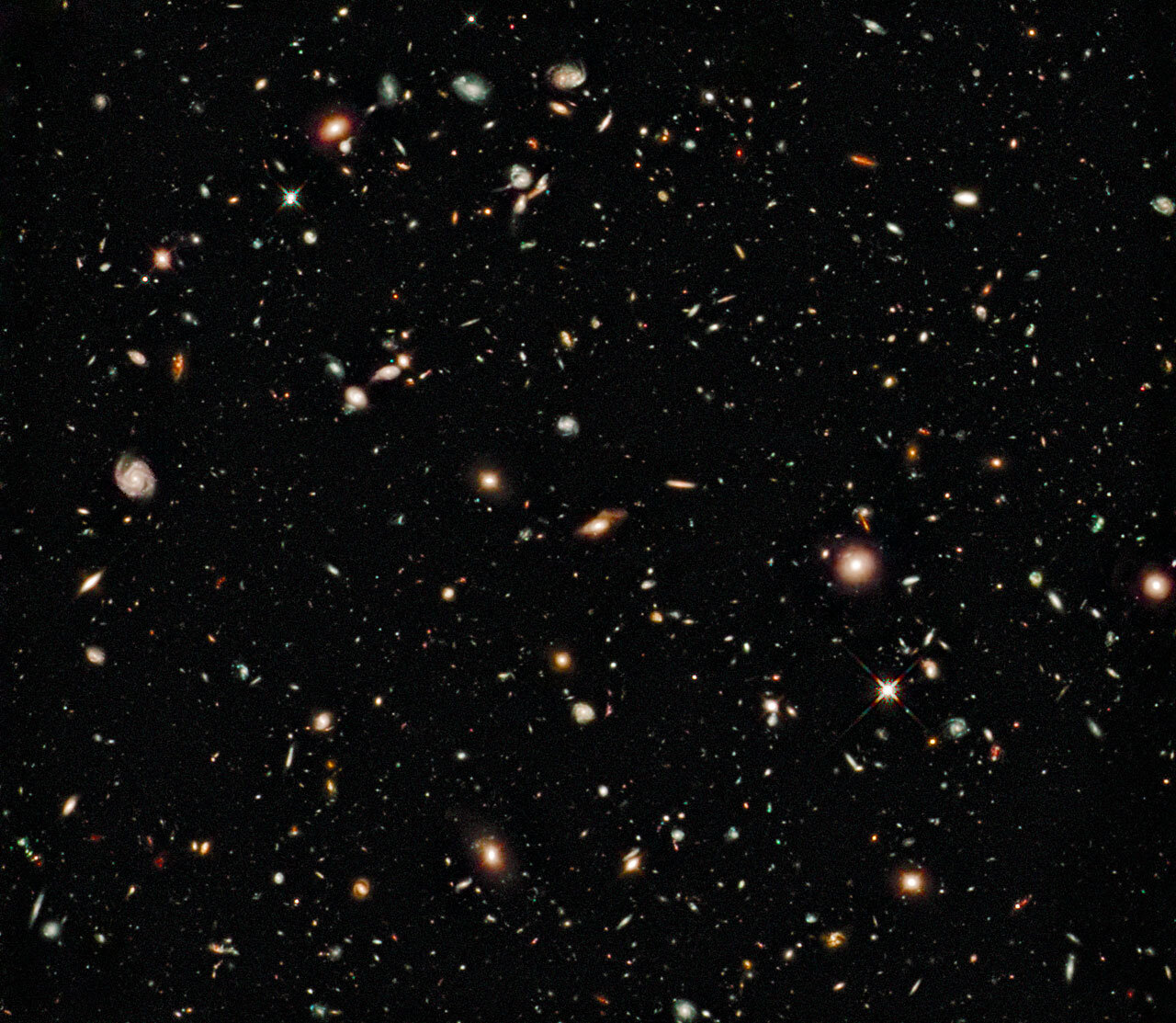
- 300-500 million years: Gravity pulls more and more matter together, forming the very first galaxies. The oldest galaxies we’ve ever seen are from when the Universe was only 500 million years old, but there could be even earlier ones that are just harder to see. Young galaxies don’t look like the great spirals and ellipticals of today; they are violent places bathed in ultraviolet (and even stronger) radiation, due to huge and intense regions of star formation and frequent supernovas. The youngest galaxies looked like this:

- 900-950 million years: Things in the night sky become visible! Up until this point, the neutral atoms in between the galaxies would absorb all of the light. For the first time since the first neutral atoms were formed, enough radiation has been emitted from stars to make the tiny amounts of intergalactic matter transparent to visible light.

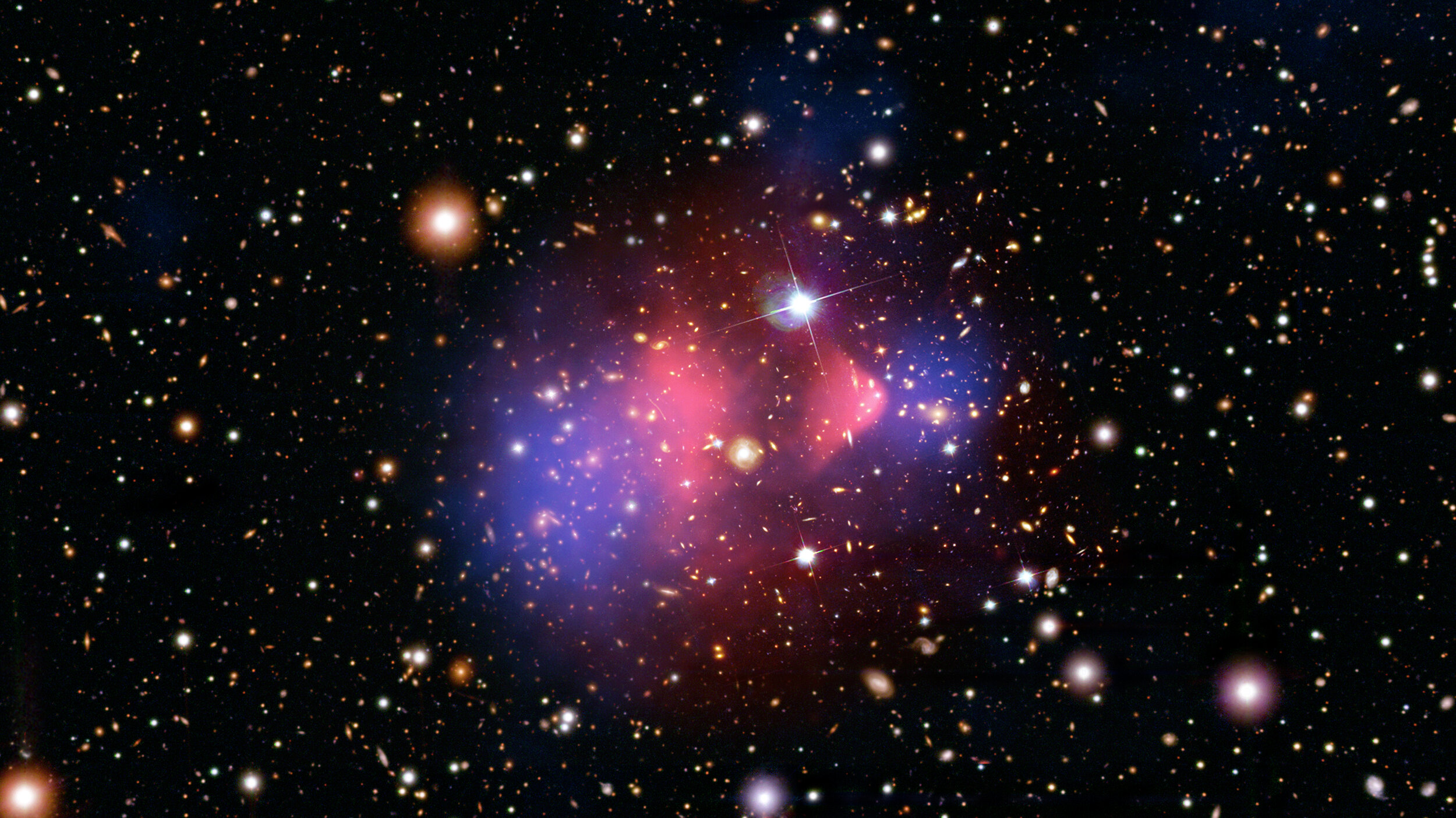
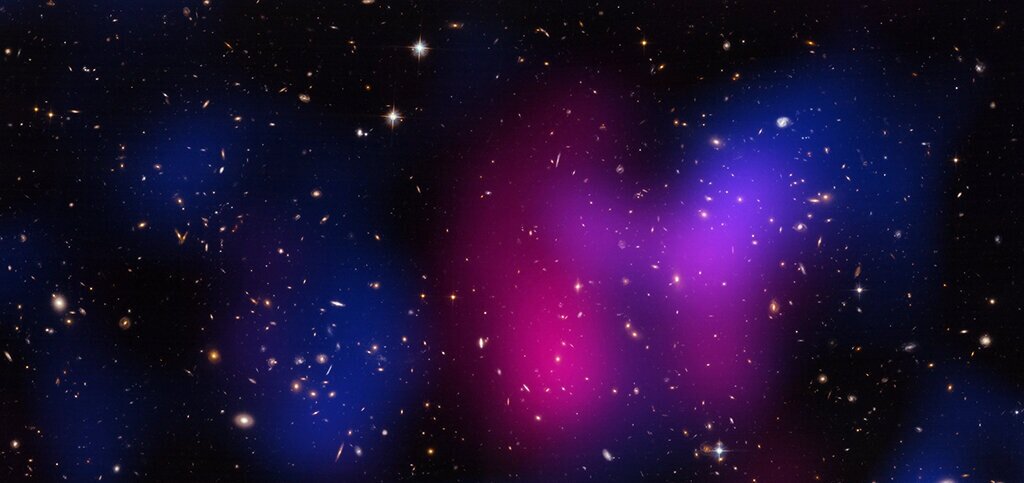
- ~3 billion years: Gravity has been working so hard for so long, and now its great efforts finally start to pay off, as the first huge galaxy clusters in the Universe form. Hundreds or even thousands of galaxies, most as big as our own, many even bigger, coalesce together to for huge conglomerations of clusters. We don’t live in one, as our local group is teeny-tiny, but there are many nearby, including Virgo, Coma, Fornax, and Centaurus.

- 3.5 billion years: The expansion rate of the Universe starts slowing down by less than we expect. At this point, the very first evidence for dark energy can be seen in the Universe.

- 9.1-9.2 billion years: A random gas cloud collapses to form a star within a spiral arm of a random galaxy. Whenever you look at a galaxy and see pink, those are emission lines that are surefire signs of star formation, like in this picture of the whirlpool galaxy:

Although this sort of thing happens all the time in the Universe, and has been happening ever since the first spiral galaxies were formed over 8.5 billion years prior, this random star is special. You see, this random star is our Sun.

Come on back tomorrow, to learn about the last 4.5 billion years of the Universe. (Trust me, that’s when a lot of good stuff happens!)
17 Comments »
RSS feed for comments on this post. TrackBack URI
Leave a comment
Entries and comments feeds. Valid XHTML and CSS. ^Top^ Powered by TopSoftware4Download.com with a personally modified jd-nebula-3c theme design.

This is amazing stuff. To just think about our universe makes me stop in my tracks in awe. To think most people just live their lives never thinking how amazing this place is where we live, and how we came to exist here, and I can only hope I live long enough to understand all we can learn in the coming years. Staring up in the sky and seeing all the stars at night, and just getting to understand the size and scale of our own solar system is mind boggling. Thank you Ethan for creating this site to help the everyday guy be able get some understanding off all of this witout neeeding a degree in physics. GLAST is going to be amazing tool and don’t forget about the James Webb space telescope! 5 years seems so long……not!
Comment by dan w. — June 5, 2008 #
Dan,
I’m so happy to have a reader like you! This made my day, and I’m just as passionate about this as you are. I’m really glad I can help you understand this Universe a little bit more.
Ethan
Comment by ethan — June 5, 2008 #
Nathan,
You could also mention that the strong force drops out at about 10^-30 seconds and that the electroweak force finishes out at about 10^-10 seconds. That meaning that the physics of the Standard Model is completed. Just a thought.
Mark
Comment by mark a. thomas — June 5, 2008 #
Im sorry I mean Ethan not Nathan.
Mark
Comment by mark a. thomas — June 5, 2008 #
Mark,
That’s mostly true. That’s when the symmetries are expected to be broken, true, and hence when the “Grand Unified Force” breaks into strong and electroweak (assuming that there is a GUT, which I believe, but which hasn’t been tested yet), and the electroweak force gets broken into electromagnetic and weak (this we know is true), and that happens, as you say, at 10-10 seconds.
But the strong force is still super interesting. At energies above about 200 MeV, or at times earlier than about 10-5 s, the Universe is too hot or dense to have protons and neutrons! The stuff that makes them up, quarks and gluons, gets so hot that you have a quark-gluon plasma instead; how neat is that?!
Thanks for the heads up, this was super interesting!
Ethan
Comment by ethan — June 5, 2008 #
[…] Posts Timeline of Natural History - Part 3Timeline of Natural History - Part 2Timeline of Natural History - Part 1Just one cell?So, I’m Not an Evolutionary BiologistWeekend […]
Pingback by Timeline of Natural History - Part 3 | Starts With A Bang! — June 6, 2008 #
Broken link for “Dark Energy”
Comment by David Janes — June 15, 2008 #
Sorry, David; you’re right. It was here: http://imagine.gsfc.nasa.gov/docs/%20science/mysteries_l1/dark_energy.html but that link is dead, too, since they re-wired the NASA site. I unlinked it in the main page.
Comment by ethan — June 15, 2008 #
mAgTRZ
Comment by Yohkuqyg — July 14, 2009 #
vNPc1b Perfect site, i like it!
Comment by phentermine diuretic — August 1, 2009 #
21O5X3 Great site. Keep doing.
Comment by consultation phentermine — August 2, 2009 #
Отличное наполнение блога, есть что почитать интересного, спс
Comment by Tenders — September 5, 2009 #
В этот день, как нарочно
Comment by NejikFans — September 5, 2009 #
Посоветовали мне этот блог, и видно что незря, есть все что я хотел найти.
Comment by Tamada — September 15, 2009 #
Посоветовали друзья этот блог и были правы, все то что я и хотел найти. Понравилось очень
Comment by Trader — September 16, 2009 #
Beautiful site!
Comment by tramadol renal failure — November 29, 2009 #
Perfect work!
Comment by good credit score credit restoration bettercreditsitecom — March 30, 2010 #